

Skip to content
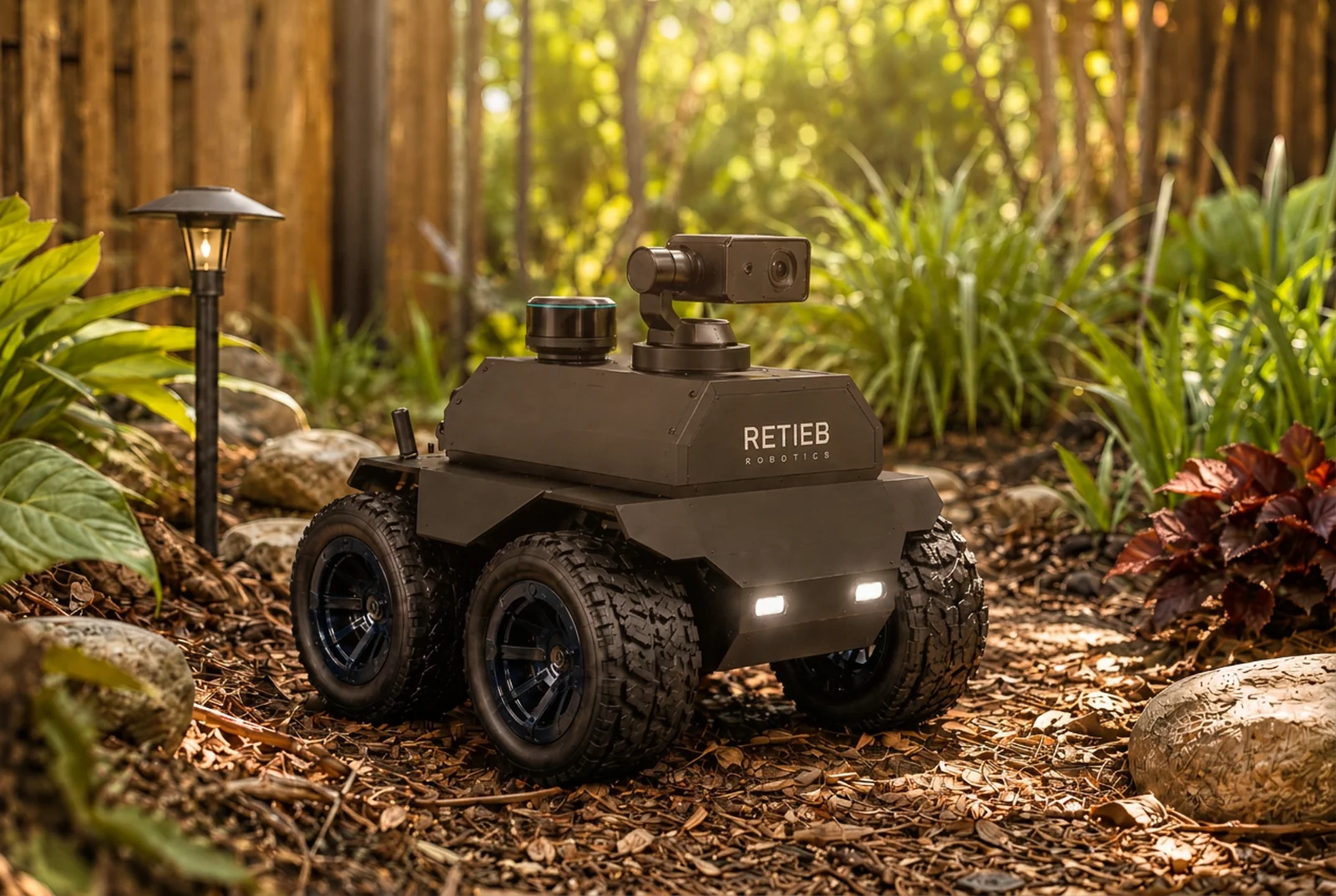
Concept visualisation of the mature ERDEN Scout platform — a modular outdoor ground rover
Concept vision

Target platform. The hardware below is the prototype we are actually building on today.

ERDEN program · Ground platform 01

ERDEN Scout

Observe.Understand.Assist.

A modular autonomous rover being developed to help homeowners better understand and care for their property through practical robotics.

Engineering snapshot

Sourced from platform metadata and the engineering log — it changes as the work does.

Platform
WAVE ROVER 4WD
Development chassis
Development state
Prototype testing
Current focus
Power validation
Testing
Current challenge
Charging verification
Testing
Next milestone
Power validation complete
Q3 2026
Last updated
1 Aug 2026
From the engineering log
Engineering log
7
Entries published
Related hardware
8
Components documented
Related modules
5
Capability packages
Log entries
7
Decisions
6
Modules
5

Platform brief

Derived by traversing the knowledge graph: objective, milestones, active areas, blockers, decisions, and risks. Nothing on this panel is written by hand.

Platform brief

Prototype · Testing

Help people understand and care for the property they live on. Scout exists to spend time outdoors, notice what changes, and eventually take on the small, repetitive tasks of looking after a place — not by being clever, but by being dependable enough to be left to it.

Current objective
ERDEN Scout

ERDEN program · Ground platform 01

Current milestone
Power validation complete

Q3 2026

Next milestone
First teleoperated drive

Q3 2026

Next recommended
Advance Environmental systems beyond research

It is the least-advanced subsystem, and platform readiness is bounded by its weakest part.

Open blockers
5
Outstanding decisions
3

Current risks

1 derived

Engineering review

A full review assembled from the graph: readiness, risk, milestone progress, period-over-period change, and recommended next actions. Every conclusion cites the records it was derived from.

Executive summary

ERDEN Scout

ERDEN Scout is prototype with overall readiness at early. 5 challenges remain open while the platform works towards "Power validation complete".

  • Readiness is limited by module readiness, integration readiness.
  • 8 hardware records, 5 modules, and 6 decisions are referenced.
  • 7 log entries provide the timestamped evidence behind this review.
  • 1 risk condition and 19 validation findings are present in scope.
Evidence
  • PlatformERDEN ScoutPlatform mission statementERDEN program · Ground platform 01
  • PlatformERDEN ScoutLifecycle status: Prototype
  • MilestonePower validation completeCurrent milestone
  • MilestoneFirst teleoperated driveNext milestone
  • MilestonePrototype procurementCompleted: Prototype procurement2026-05-09
  • MilestonePlatform inspectionCompleted: Platform inspection2026-05-16
  • MilestonePower tree measuredCompleted: Power tree measured2026-05-30
  • MilestoneOnboard power system adoptedCompleted: Onboard power system adopted2026-06-13
  • MilestoneBattery architecture fittedCompleted: Battery architecture fitted2026-06-27
  • LogPreparing for the first teleoperated drive2026-08-01 · Testing
  • LogMotor mount failure2026-07-18 · Mechanical
  • LogBattery architecture2026-06-27 · Power
  • LogAn unexpected power system2026-06-13 · Electrical
  • LogPower system investigation2026-05-30 · Power
  • LogInside the chassis2026-05-16 · Mechanical
Evidence not in the graph
  • Some milestones carry coarse periods rather than dates, so they are excluded from time windows.
  • Every statement is derived from the current registries; nothing in this summary is authored.

Review sections

8 derived

Current objective

Help people understand and care for the property they live on. Scout exists to spend time outdoors, notice what changes, and eventually take on the small, repetitive tasks of looking after a place — not by being clever, but by being dependable enough to be left to it.

  • The platform record is prototype.
  • Prototype integration. The base platform is torn down, understood, and reassembled with the pack and compute fitted. Power is on and behaving, and the measured power tree is the reference document for the platform. The drivetrain is waiting on replacement motor mounts after the first revision cracked under load, and the control link is being brought up. Nothing has driven under command yet.
Evidence
  • PlatformERDEN ScoutPlatform mission statementERDEN program · Ground platform 01
  • PlatformERDEN ScoutLifecycle status: Prototype

Active work

4 engineering areas are open on this platform.

  • Power validation — Testing.
  • Radio bring-up — Integration.
  • Drivetrain mounting — Engineering.
  • Camera integration — Planning.
Evidence

Hardware status

8 hardware records referenced; readiness is developing.

  • 2 prototype.
  • 1 in development.
  • 5 bring-up.
WAVE ROVER 4WDMotor and encoder mounts (custom)Jetson NanoCSI camera3S lithium-ion packWaveshare onboard power systemExternal DC charging inputExpressLRS link
Evidence
  • HardwareWAVE ROVER 4WDChassis · Waveshare
  • HardwareMotor and encoder mounts (custom)Drive · Designed and printed in-house
  • HardwareJetson NanoCompute · NVIDIA
  • HardwareCSI cameraSensing · Generic (IMX219 class)
  • Hardware3S lithium-ion packPower · Assembled in-house from 18650 cells
  • HardwareWaveshare onboard power systemPower · Waveshare
  • HardwareExternal DC charging inputPower · Waveshare
  • HardwareExpressLRS linkComms · ExpressLRS (open source)

Module status

5 modules mounted or declared compatible; least-advanced state is engineering.

  • Vision module: in development · engineering.
  • Payload interface: concept · planning.
  • Docking module: concept · research.
  • Environmental probe: concept · research.
  • Thermal module: concept · research.
Evidence

Decision status

4 of 6 decisions are accepted; 3 remain open.

  • Use a commercial rover base rather than fabricating a chassis: accepted, outcome recorded.
  • Use the onboard Waveshare power system rather than a custom distribution board: accepted, outcome recorded.
  • 3S lithium-ion pack matched to the onboard charger: accepted, outcome recorded.
  • Keep the control link and stop path independent of the autonomy computer: accepted, no outcome recorded.
  • Design the motor and encoder mounts in-house: revisiting, outcome recorded.
  • Specify the payload interface before building any payload: proposed, no outcome recorded.
Evidence
Evidence not in the graph
  • Keep the control link and stop path independent of the autonomy computer has no recorded outcome.
  • Specify the payload interface before building any payload has no recorded outcome.

Integration review

0 of 9 subsystems are operational.

  • 9 subsystems are tracked on the platform record.
  • Weakest subsystem: Vision.
  • 0 of 9 subsystems are operational.
Evidence
  • SubsystemMechanical: EngineeringChassis torn down, catalogued, and reassembled. Custom motor and encoder mounts failed at revision one; revision two is in design.
  • SubsystemElectrical: TestingPower tree measured and documented. Onboard Waveshare charge and distribution in use; charge termination still to be verified externally.
  • SubsystemCompute: IntegrationJetson Nano mounted and powered from the regulated rail. Not yet carrying a workload; current draw under load is an open question.
  • SubsystemVision: PlanningCSI camera mounted. Capture pipeline, frame timing, and rail impact all still to be worked through.
  • SubsystemNavigation: PlanningNothing integrated. Encoder feedback is unusable until the mounts are replaced, and everything here sits on top of that.
  • SubsystemCommunications: IntegrationActive work. Transmitter and receiver selected; binding, protocol, and failsafe behaviour are being brought up now.
  • SubsystemEnvironmental systems: ResearchWeather sealing, thermal behaviour, and ambient sensing are all unaddressed. The platform has not yet been outdoors.
  • SubsystemAutonomy: ResearchDeliberately untouched. No autonomy work begins before the platform can be driven and stopped predictably.
  • SubsystemHome Assistant: ResearchIntended integration point for status, telemetry, and scheduled tasks alongside the rest of a property's systems. Scoped, not started.
  • HardwareWAVE ROVER 4WDChassis · Waveshare
  • HardwareMotor and encoder mounts (custom)Drive · Designed and printed in-house
  • HardwareJetson NanoCompute · NVIDIA
  • HardwareCSI cameraSensing · Generic (IMX219 class)
  • Hardware3S lithium-ion packPower · Assembled in-house from 18650 cells
  • HardwareWaveshare onboard power systemPower · Waveshare
  • HardwareExternal DC charging inputPower · Waveshare
  • HardwareExpressLRS linkComms · ExpressLRS (open source)
  • ModuleVision moduleEngineering
  • ModulePayload interfacePlanning
  • ModuleDocking moduleResearch
  • ModuleEnvironmental probeResearch
  • ModuleThermal moduleResearch

Open blockers

5 challenges referencing this platform are not complete.

  • Motor mount replacement: in development · engineering.
  • Charging verification: in development · testing.
  • Camera integration: in development · planning.
  • Radio configuration: in development · integration.
  • Runtime under load is unknown: concept · research.
Evidence

Recent engineering activity

7 log entries recorded; newest is 2026-08-01.

  • 2026-08-01 — Preparing for the first teleoperated drive (Testing).
  • 2026-07-18 — Motor mount failure (Mechanical).
  • 2026-06-27 — Battery architecture (Power).
  • 2026-06-13 — An unexpected power system (Electrical).
  • 2026-05-30 — Power system investigation (Power).
  • 2026-05-16 — Inside the chassis (Mechanical).
Evidence

Milestone review

5 complete

Working towards "Power validation complete"; 5 of 12 milestones are complete.

Current milestone
Power validation complete

Q3 2026

Next milestone
First teleoperated drive

Q3 2026

Next recommended
Advance Environmental systems beyond research

It is the least-advanced subsystem, and platform readiness is bounded by its weakest part.

Completed5
Prototype procurementPlatform inspectionPower tree measuredOnboard power system adoptedBattery architecture fitted
Open7
Power validation completeFirst teleoperated driveCamera integrationHome Assistant integrationFirst supervised outdoor traverseFirst autonomous missionAutonomous docking
Progress since previous milestone

3 log entries have been recorded since "Battery architecture fitted".

  • The most recent completed milestone is "Battery architecture fitted" (2026-06-27).
  • 0 log entries in that period is marked complete.
  • 3 decisions were recorded in the same period.
Evidence
  • Progress is measured from log and decision timestamps only; undated records are excluded.
Evidence
  • MilestonePower validation completeCurrent milestone
  • MilestoneFirst teleoperated driveNext milestone
  • MilestonePrototype procurementCompleted: Prototype procurement2026-05-09
  • MilestonePlatform inspectionCompleted: Platform inspection2026-05-16
  • MilestonePower tree measuredCompleted: Power tree measured2026-05-30
  • MilestoneOnboard power system adoptedCompleted: Onboard power system adopted2026-06-13
  • MilestoneBattery architecture fittedCompleted: Battery architecture fitted2026-06-27
Evidence not in the graph
  • Some milestones carry coarse periods rather than dates, so they are excluded from time windows.

Readiness review

Early overall

Overall readiness is early.

  • Overall readiness is limited by the weakest supported dimension: Module readiness, Integration readiness.
  • 5 of 5 dimensions have supporting records in the graph.
  • The limiting dimensions are module readiness, integration readiness.
Evidence
  • HardwareHardware readiness: Developing8 hardware records referenced by this platform.
  • ModuleModule readiness: Early5 modules are mounted or declared compatible.
  • SubsystemIntegration readiness: Early9 subsystems are tracked on the platform record.
  • PlatformDocumentation completeness: Ready13 of 13 referenced hardware and module records carry a description and supporting detail (100%).
  • DecisionDecision completeness: Integrating3 of 6 recorded decisions are accepted with a documented outcome.
  • Readiness is a position on an ordered ladder derived from record states, not a percentage or an estimate.
Hardware readinessDeveloping
  • 8 hardware records referenced by this platform.
  • Weakest lifecycle status: Prototype.
WAVE ROVER 4WDMotor and encoder mounts (custom)Jetson NanoCSI camera3S lithium-ion packWaveshare onboard power system
Module readinessEarly
  • 5 modules are mounted or declared compatible.
  • Least-advanced module state: Planning.
Integration readinessEarly
  • 9 subsystems are tracked on the platform record.
  • Weakest subsystem: Vision.
  • 0 of 9 subsystems are operational.
Documentation completenessReady
  • 13 of 13 referenced hardware and module records carry a description and supporting detail (100%).
  • No platform-level documents are attached yet.

Risk review

1 derived

1 risk condition derived from the graph, alongside 19 validation findings in scope.

  • low4 provisional records

    Records marked provisional in the registries are carrying part of this platform's definition.

    Clears when the provisional flag is removed from the referenced records and real detail is recorded.

    Contributing records
Validation findings in scope19
  • infoNo datasheet or vendor documentation linked.WAVE ROVER 4WD
  • infoNo datasheet or vendor documentation linked.Motor and encoder mounts (custom)
  • infoNo datasheet or vendor documentation linked.Jetson Nano
  • infoNo datasheet or vendor documentation linked.CSI camera
  • infoNo datasheet or vendor documentation linked.3S lithium-ion pack
  • infoNo datasheet or vendor documentation linked.Waveshare onboard power system
  • infoNo datasheet or vendor documentation linked.External DC charging input
  • infoNo datasheet or vendor documentation linked.ExpressLRS link
  • infoPhase delivers no module.Procurement and inspection
  • infoPhase delivers no module.Power validation

Change summary

9 Jul 2026 – 8 Aug 2026

Compared against the preceding 30-day window (2026-06-09 to 2026-07-09). Dates come from the engineering log and the decision registry; records without dates are excluded.

Engineering log entries
20from 2
Work completed
0-1from 1
Decisions recorded
1-2from 3
Hardware first referenced
1-1from 2

Dated by first appearance in the log.

Modules first referenced
00from 0

Dated by first appearance in the log.

Blockers active
20from 2
Blockers resolved
00from 0
Work completed0

Nothing closed in this window.

Hardware first referenced1
ExpressLRS link
Modules first referenced0

No module appeared for the first time.

Readiness is derived from current record states. The graph stores no history of those states, so a readiness delta cannot be computed without inventing one.

Recommended next actions

6 derived
  1. highAdvance module readiness beyond early
    Reason

    Overall readiness is bounded by the weakest supported dimension, so nothing else raises it while this one holds.

    Triggered by

    5 modules are mounted or declared compatible. Least-advanced module state: Planning.

    Expected impact

    Raises the platform's overall readiness level, which no other dimension can do while this one is lowest.

    Supporting evidence
  2. highAdvance integration readiness beyond early
    Reason

    Overall readiness is bounded by the weakest supported dimension, so nothing else raises it while this one holds.

    Triggered by

    9 subsystems are tracked on the platform record. Weakest subsystem: Vision. 0 of 9 subsystems are operational.

    Expected impact

    Raises the platform's overall readiness level, which no other dimension can do while this one is lowest.

    Supporting evidence
    Evidence not in the graph
    • No individual records were attached to this dimension — it was derived from the record's own fields.
  3. mediumClose 5 open challenges
    Reason

    Open challenges are the platform's declared unknowns; each one holds work behind it.

    Triggered by

    5 challenges referencing this platform are not yet complete.

    Expected impact

    Reduces the platform's open-question surface and frees the linked engineering areas to progress.

    Supporting evidence
  4. mediumSettle 3 outstanding decisions
    Reason

    Decisions that are proposed, revisiting, or missing an outcome leave dependent hardware and modules provisional.

    Triggered by

    3 decisions linked to this platform are unresolved in the decision registry.

    Expected impact

    Improves decision completeness, which is one of the five readiness dimensions.

  5. mediumAdvance Environmental systems beyond research
    Reason

    It is the least-advanced subsystem, and platform readiness is bounded by its weakest part.

    Triggered by

    Derived by the platform brief from milestone, roadmap, subsystem, and blocker state.

    Expected impact

    Advances the earliest incomplete commitment the platform record holds.

  6. lowReplace 4 provisional records with measured detail
    Reason

    Provisional records carry part of the platform definition without confirmed data behind them.

    Triggered by

    Records marked provisional in the registries are carrying part of this platform's definition.

    Expected impact

    Removes provisional flags from the definition and strengthens documentation completeness.

    Supporting evidence

Milestone gate

The highest gate stage whose conditions currently hold, with every evaluated condition and the records behind it.

Milestone gate — ERDEN Scout

Ready for review

Ready for review passes because Mission and current status are recorded on the platform. 8 hardware records referenced. 7 log entries reference this platform. No validation error is reported in scope.

Next gate — Ready for integration1
  • Every referenced decision is settled with an outcome — 3 decisions are proposed, revisiting, or missing an outcome.
Evaluated stages4
Ready for reviewPassed
  • The platform record states a mission and current statusMission and current status are recorded on the platform.ERDEN Scout
  • At least one hardware record is referenced8 hardware records referenced.
  • Engineering activity is recorded in the log7 log entries reference this platform.
  • No validation errors in scopeNo validation error is reported in scope.
Ready for integrationNot met
Ready for testingNot met
Ready for releaseNot met
  • Every subsystem is at testing or operational1 of 9 subsystems are at testing or operational.
  • Overall readiness is validating or readyOverall readiness is early, limited by Overall readiness.
  • Every recorded milestone is complete5 of 12 milestones are complete.
  • No validation errors or warnings in scope0 errors and 0 warnings in scope.
  • Documentation readiness has reached validatingDocumentation readiness is ready.
Gate evidence
  • PlatformERDEN ScoutLifecycle status: Prototype
  • SubsystemMechanical: EngineeringChassis torn down, catalogued, and reassembled. Custom motor and encoder mounts failed at revision one; revision two is in design.
  • SubsystemElectrical: TestingPower tree measured and documented. Onboard Waveshare charge and distribution in use; charge termination still to be verified externally.
  • SubsystemCompute: IntegrationJetson Nano mounted and powered from the regulated rail. Not yet carrying a workload; current draw under load is an open question.
  • SubsystemVision: PlanningCSI camera mounted. Capture pipeline, frame timing, and rail impact all still to be worked through.
  • SubsystemNavigation: PlanningNothing integrated. Encoder feedback is unusable until the mounts are replaced, and everything here sits on top of that.
  • SubsystemCommunications: IntegrationActive work. Transmitter and receiver selected; binding, protocol, and failsafe behaviour are being brought up now.
  • SubsystemEnvironmental systems: ResearchWeather sealing, thermal behaviour, and ambient sensing are all unaddressed. The platform has not yet been outdoors.
  • SubsystemAutonomy: ResearchDeliberately untouched. No autonomy work begins before the platform can be driven and stopped predictably.
  • SubsystemHome Assistant: ResearchIntended integration point for status, telemetry, and scheduled tasks alongside the rest of a property's systems. Scoped, not started.
  • ChallengeMotor mount replacementOpen: Motor mount replacementIn development · Engineering
  • ChallengeCharging verificationOpen: Charging verificationIn development · Testing
  • ChallengeCamera integrationOpen: Camera integrationIn development · Planning
  • ChallengeRadio configurationOpen: Radio configurationIn development · Integration
  • ChallengeRuntime under load is unknownOpen: Runtime under load is unknownConcept · Research
  • DecisionKeep the control link and stop path independent of the autonomy computerUnsettled: Keep the control link and stop path independent of the autonomy computerAccepted · 4 Jul 2026
  • DecisionDesign the motor and encoder mounts in-houseUnsettled: Design the motor and encoder mounts in-houseRevisiting · 18 Jul 2026
  • DecisionSpecify the payload interface before building any payloadUnsettled: Specify the payload interface before building any payloadProposed · 2027

Engineering checklist

Live graph conditions. There is no completion state: satisfying a condition removes its item.

Engineering checklist — ERDEN Scout

26 open · 5 blocking

26 conditions are currently true in the graph across 5 areas; 5 of them block a gate.

High
0
Medium
13
Low
13
Blocking
5

gate conditions

Outstanding blockers5
  • mediumBlockingCamera integration

    The challenge is in development at planning and references this platform.

    Clears when: The challenge record's status becomes complete.

  • mediumBlockingCharging verification

    The challenge is in development at testing and references this platform.

    Clears when: The challenge record's status becomes complete.

  • mediumBlockingMotor mount replacement

    The challenge is in development at engineering and references this platform.

    Clears when: The challenge record's status becomes complete.

  • mediumBlockingRadio configuration

    The challenge is in development at integration and references this platform.

    Clears when: The challenge record's status becomes complete.

  • mediumBlockingRuntime under load is unknown

    The challenge is concept at research and references this platform.

    Clears when: The challenge record's status becomes complete.

Missing dependencies7
  • mediumEnvironmental probe declares no hardware dependency

    The module record carries no hardwareIds, so nothing in the graph states what it physically needs.

    Clears when: The module references at least one hardware record.

  • mediumThermal module declares no hardware dependency

    The module record carries no hardwareIds, so nothing in the graph states what it physically needs.

    Clears when: The module references at least one hardware record.

  • lowAutonomy links to no hardware or module

    The subsystem records an engineering state but no record that implements it, so its state cannot be corroborated.

    Clears when: The subsystem references at least one hardware or module record.

  • lowExpressLRS link is not claimed by any module

    No module in the registry references this hardware record, so its purpose is not expressed as a relationship.

    Clears when: A module lists this hardware id, or the hardware record reaches complete.

    ExpressLRS link
  • lowHome Assistant links to no hardware or module

    The subsystem records an engineering state but no record that implements it, so its state cannot be corroborated.

    Clears when: The subsystem references at least one hardware or module record.

  • lowMotor and encoder mounts (custom) is not claimed by any module

    No module in the registry references this hardware record, so its purpose is not expressed as a relationship.

    Clears when: A module lists this hardware id, or the hardware record reaches complete.

    Motor and encoder mounts (custom)
  • lowWAVE ROVER 4WD is not claimed by any module

    No module in the registry references this hardware record, so its purpose is not expressed as a relationship.

    Clears when: A module lists this hardware id, or the hardware record reaches complete.

    WAVE ROVER 4WD
Incomplete modules5
  • mediumDocking module is at research

    The module record's engineering state is research and its lifecycle status is concept.

    Clears when: The module record's engineering state reaches operational.

  • mediumEnvironmental probe is at research

    The module record's engineering state is research and its lifecycle status is concept.

    Clears when: The module record's engineering state reaches operational.

  • mediumPayload interface is at planning

    The module record's engineering state is planning and its lifecycle status is concept.

    Clears when: The module record's engineering state reaches operational.

    Payload interface
  • mediumThermal module is at research

    The module record's engineering state is research and its lifecycle status is concept.

    Clears when: The module record's engineering state reaches operational.

  • lowVision module is at engineering

    The module record's engineering state is engineering and its lifecycle status is in development.

    Clears when: The module record's engineering state reaches operational.

Required decisions3
  • mediumDesign the motor and encoder mounts in-house is revisiting

    The decision registry holds this decision in a non-final status, so everything downstream of it remains provisional.

    Clears when: The decision status becomes accepted or superseded.

  • mediumSpecify the payload interface before building any payload is proposed

    The decision registry holds this decision in a non-final status, so everything downstream of it remains provisional.

    Clears when: The decision status becomes accepted or superseded.

  • lowKeep the control link and stop path independent of the autonomy computer has no recorded outcome

    The decision is settled but the record carries no outcome, so its consequence is not in the graph.

    Clears when: An outcome is recorded on the decision.

Missing documentation6
  • lowDocking module is marked provisional

    The record carries a placeholder flag, so part of the platform definition has no confirmed data behind it.

    Clears when: The placeholder flag is removed once measured detail replaces it.

  • lowEnvironmental probe is marked provisional

    The record carries a placeholder flag, so part of the platform definition has no confirmed data behind it.

    Clears when: The placeholder flag is removed once measured detail replaces it.

  • lowPayload interface is marked provisional

    The record carries a placeholder flag, so part of the platform definition has no confirmed data behind it.

    Clears when: The placeholder flag is removed once measured detail replaces it.

  • lowSpecify the payload interface before building any payload is marked provisional

    The record carries a placeholder flag, so part of the platform definition has no confirmed data behind it.

    Clears when: The placeholder flag is removed once measured detail replaces it.

  • lowThe platform record links no documentation

    No documentation links are recorded on the platform, so reviews have nothing external to cite.

    Clears when: At least one documentation link is recorded on the platform.

  • lowThermal module is marked provisional

    The record carries a placeholder flag, so part of the platform definition has no confirmed data behind it.

    Clears when: The placeholder flag is removed once measured detail replaces it.

Dependency summary

Direct and reverse dependencies for this platform, with the impact radius reachable through the graph.

Dependency summary

87 records in radius
Direct dependencies
35

Records this one points at

Reverse dependencies
31

Records pointing back

Dependency depth
3

Longest downstream chain

Depends on35
Depended on by31
Impact radius by depth
Depth 1 · 35
Depth 3 · 39

Current development platform

Where the engineering is actually happening right now.

Engineering is currently being performed on a modified Waveshare WAVE ROVER (FWD) development platform.

Using a donor chassis lets us focus on autonomy, sensing, software, and systems integration while the long-term ERDEN platform evolves through continuous engineering. The concept above is the destination; the bench is the present.

Everything on this page is documented as it happens, including the revisions that failed. We publish engineering, not marketing — the journey is part of the product.

Donor chassis
Waveshare WAVE ROVER (FWD)
Retained
Drivetrain, chassis, integrated driver board
Replaced or added
Compute, power, radio, vision, custom mounts
Long-term platform
ERDEN — in continuous engineering

Current challenges

Active engineering work, stated plainly. Entries stay here until they are genuinely resolved.

In developmentEngineeringMechanical

Motor mount replacement

The first-revision printed motor brackets cracked at the fastener bosses under drivetrain load. Because the same bracket locates the encoder against the motor shaft, a compliant mount corrupts odometry well before it fails visibly. Revision two thickens the bosses and moves to a stiffer material; it has not yet been printed or loaded.

In developmentTestingPower

Charging verification

The onboard charger appears to bring the 3S pack up correctly, but termination voltage, termination behaviour, and cell balance at the top of charge have not been confirmed with an external meter. Until they are, charging stays supervised and the platform does not sit on the charger unattended.

In developmentPlanningPerception

Camera integration

The CSI camera is mounted but not yet streaming reliably from the Jetson. Open questions are the capture pipeline, frame timing, and what the camera adds to the 5 V rail once it runs continuously alongside compute.

In developmentIntegrationElectrical

Radio configuration

The control link needs to arrive as a genuinely independent path — a transmitter, a receiver, a failsafe that triggers on link loss, and a stop that does not depend on the autonomy computer being healthy. Binding, protocol selection, and failsafe behaviour are all still open.

ConceptResearchPower

Runtime under load is unknown

No figure is published for endurance because none has been measured. The pack has never been drawn down under a representative drive-and-compute load, and estimating it from cell capacity would be a guess presented as a specification.

Mission

Help people understand and care for the property they live on. Scout exists to spend time outdoors, notice what changes, and eventually take on the small, repetitive tasks of looking after a place — not by being clever, but by being dependable enough to be left to it.

Most of what goes wrong around a property announces itself early and quietly: standing water where there was none, a fence post moving, a gutter overflowing in the same corner each time it rains. A person notices these things eventually. A machine that walks the same ground regularly notices them sooner, and remembers what it looked like last month.

Scout is the first platform in the ERDEN program and it is deliberately modest. It is not a product and is not intended to be one. Its purpose is to give us a physical, instrumented base to develop control, perception, and navigation against — and to force the unglamorous problems into the open early, where they are cheap to fix.

Development is being documented publicly in the Engineering Log as it happens, including the parts that failed. A record that only contains successes is not an engineering record; it is marketing with dates on it.

Engineering dashboard

Prototype integration. The base platform is torn down, understood, and reassembled with the pack and compute fitted. Power is on and behaving, and the measured power tree is the reference document for the platform. The drivetrain is waiting on replacement motor mounts after the first revision cracked under load, and the control link is being brought up. Nothing has driven under command yet.

Drivetrain
4WD skid steer
confirmed
Battery
3SLi-ion
fitted
Primary compute
Jetson Nano
mounted, no workload
Control link
In bring-up
not yet driven
Runtime under load
Not measured
no figure published
Custom parts on platform
1
motor mounts, rev 2 pending
Open challenges
5
tracked
Log entries published
7
since May 2026

Subsystem state

  • MechanicalEngineering

    Chassis torn down, catalogued, and reassembled. Custom motor and encoder mounts failed at revision one; revision two is in design.

  • ElectricalTesting

    Power tree measured and documented. Onboard Waveshare charge and distribution in use; charge termination still to be verified externally.

  • ComputeIntegration

    Jetson Nano mounted and powered from the regulated rail. Not yet carrying a workload; current draw under load is an open question.

  • VisionPlanning

    CSI camera mounted. Capture pipeline, frame timing, and rail impact all still to be worked through.

  • NavigationPlanning

    Nothing integrated. Encoder feedback is unusable until the mounts are replaced, and everything here sits on top of that.

  • CommunicationsIntegration

    Active work. Transmitter and receiver selected; binding, protocol, and failsafe behaviour are being brought up now.

  • Environmental systemsResearch

    Weather sealing, thermal behaviour, and ambient sensing are all unaddressed. The platform has not yet been outdoors.

  • AutonomyResearch

    Deliberately untouched. No autonomy work begins before the platform can be driven and stopped predictably.

  • Home AssistantResearch

    Intended integration point for status, telemetry, and scheduled tasks alongside the rest of a property's systems. Scoped, not started.

Current focus

IntegrationElectrical

Radio bring-up

Getting a control link onto the platform that is low-latency enough to drive on and independent enough to stop with. This is the last thing standing between the rover and its first teleoperated drive.

EngineeringMechanical

Drivetrain mounting

The first custom part on the platform failed under load, and it happens to be the part that locates the encoders. Revision two has to be stiff enough that odometry is a software problem rather than a mechanical one.

TestingPower

Power validation

Understanding what the onboard Waveshare power system actually does before anything depends on it. Charge termination, the regulated rail under compute load, and behaviour on brown-out all need measuring rather than assuming.

PlanningPerception

Camera integration

Bringing the CSI camera up on the Jetson and getting a stable, timestamped feed off the platform. Calibration and obstacle detection come after there is a feed that does not drop frames.

Capabilities today

Testing

Onboard power and charging

The platform charges in place through the external DC input and reports pack voltage and current from the onboard monitor. Charge termination is still being verified by hand.

Integration

Power telemetry

Voltage and current visible from the integrated monitor, giving a usable picture of what the platform is drawing before anything else is added to it.

Operational

Serviceability

The chassis opens and closes with hand tools in a few minutes, and the internal layout is photographed and catalogued. Mundane, and the reason iteration is cheap.

Operational

Measured power tree

Every rail traced with a meter rather than inherited from a diagram, including what stays live with the main switch off.

Capabilities planned

Integration

Teleoperated drive

Low-latency manual control over an independent radio link, with a stop path that does not route through the autonomy computer.

Planning

Wheel odometry

Encoder feedback producing a local pose estimate. Gated on motor mounts stiff enough to hold encoder alignment repeatably.

Planning

Live camera feed

A stable, timestamped visual feed off the platform — the prerequisite for calibration and any obstacle detection that follows.

Research

Home Assistant integration

Platform status, telemetry, and scheduled tasks surfaced alongside the other systems on a property.

Research

Supervised outdoor traverse

Driving a route across real ground with an operator present and a conservative stop policy.

ResearchProvisional

Return and recharge

Returning to a dock and recharging without a person present, so the platform can work across sessions.

Hardware

Resolved from the shared hardware registry. Components are defined once and referenced by every platform that uses them.

Chassis

Chassis hardware
ComponentDescription and specificationsStatus
WAVE ROVER 4WDWaveshare

Four-wheel-drive rover base with an integrated ESP32 driver board, providing the chassis, drivetrain, low-level motor control, and — as we discovered on inspection — the platform's power system.

4WD skid-steer base, integrated ESP32 driver board
Drive
4WD skid steer
Onboard controller
ESP32 general driver board
Control interface
JSON over serial and Wi-Fi
Feedback
Quadrature encoders on the drive motors

The base is more capable and more integrated than the documentation suggested. Most of the early engineering effort has gone into understanding what it already does rather than adding to it.

Prototype

Drive

Drive hardware
ComponentDescription and specificationsStatus
Motor and encoder mounts (custom)Designed and printed in-house

Brackets that hold the gearmotors to the chassis and locate the encoders against the motor shafts. The original set cracked at the fastener bosses under drivetrain load and is being redesigned.

Printed brackets, revision 2 in design
Revision
R1 failed; R2 in design
Process
FDM printed
Failure mode
Cracking at fastener bosses under load
Encoder location
Held against the motor shaft by the bracket

Encoder alignment depends entirely on this part, so a compliant mount degrades odometry before it fails outright. R2 thickens the bosses and moves to a stiffer material.

In development

Compute

Compute hardware
ComponentDescription and specificationsStatus
Jetson NanoNVIDIA

Primary compute module running perception, state estimation, and the autonomy stack. Kept off the drive-control path by design: the ESP32 driver board holds motion, so the Jetson can be rebooted without the platform losing control authority.

Quad-core ARM, 4 GB, CUDA-capable GPU
CPU
Quad-core ARM Cortex-A57
Memory
4 GB LPDDR4
GPU
128-core Maxwell
Storage
microSD / NVMe carrier

Mounted and powered, not yet carrying a workload. Current draw on the shared 5 V rail is one of the open questions for power validation.

Bring-up

Sensing

Sensing hardware
ComponentDescription and specificationsStatus
CSI cameraGeneric (IMX219 class)

Forward-facing camera on the CSI interface, providing the primary visual feed for perception work.

IMX219 class, CSI-2, wide FOV
Interface
MIPI CSI-2
Sensor
IMX219 class
Mount
Forward mast

Mounted but not yet streaming into anything. Frame timing and current draw on the shared 5 V rail are both open questions.

Bring-up

Power

Power hardware
ComponentDescription and specificationsStatus
3S lithium-ion packAssembled in-house from 18650 cells

Primary energy store for the platform. Three cells in series matched to the input window of the rover's onboard power system, sized for a working bench or yard session rather than maximum endurance.

3S (11.1 V nominal), 18650 cells
Configuration
3S — three cells in series
Nominal voltage
11.1 V
Cell format
18650 lithium-ion
Charging
Onboard, via the Waveshare power system
Capacity
Not yet measured under load

Capacity and runtime figures will stay unstated until the platform has drawn a full pack down under representative load.

Bring-up
Waveshare onboard power systemWaveshare

Integrated charge and distribution circuitry built into the rover's driver board. Handles pack charging, regulated rails, and voltage telemetry, replacing the custom distribution board originally planned for the platform.

Integrated 3S charging, regulated 5 V rail, INA219 monitoring
Charging
Onboard 3S charge circuit
Regulated output
5 V rail for compute and peripherals
Monitoring
INA219 current and voltage sensing
Input
External DC barrel jack

Charge termination and current draw under load have not yet been verified with an external meter. Nothing runs unattended until they are.

Bring-up
External DC charging inputWaveshare

Barrel-jack input that feeds the onboard charger, allowing the pack to be charged in place. Keeping the chassis closed between sessions is the difference between a platform that gets used and one that gets rebuilt.

DC barrel jack to onboard charger
Connector
DC barrel jack
Path
Supply to onboard charge circuit
Verification
Charge termination not yet confirmed

Charging is currently supervised. Verification is an open challenge.

Bring-up

Comms

Comms hardware
ComponentDescription and specificationsStatus
ExpressLRS linkExpressLRS (open source)

Long-range, low-latency control link used for manual operation and as the independent path for commanded stop.

915 MHz, CRSF, low-latency
Band
915 MHz
Protocol
CRSF
Failsafe
Configurable on link loss

Range under tree canopy has not been characterised; required before unattended running.

Prototype

Modules

Reusable capability packages compatible with this platform, drawn from the module registry.

EngineeringIn development

Vision module

Camera capture, calibration, and obstacle detection feeding the local planner. The first perception capability intended to be reused unchanged across platforms.

Requires a rigid forward mount and a share of the 5 V rail; both are gated on power validation.

PlanningConceptProvisional

Payload interface

The documented mechanical, power, and data interface that lets payloads be swapped without platform changes. The dependency every other payload module sits behind.

Specification pending: mounting pattern, power budget, and data bus.

ResearchConceptProvisional

Docking module

Autonomous return-to-dock and recharge, so a platform can operate across sessions without a person present at the start and end of each one.

Depends on reliable return-to-origin and a charge-state model that can be trusted.

ResearchConceptProvisional

Environmental probe

Ambient sensing payload — temperature, humidity, pressure, and air quality — logged against position so environmental data is spatially meaningful.

Depends on the payload interface being specified first.

ResearchConceptProvisional

Thermal module

Thermal imaging payload for inspection tasks, aligned to the visual feed so thermal and visible observations share one frame of reference.

Requires the payload interface and a calibrated alignment to the vision module.

Software

What is running today, what is being integrated, and what is only scoped. Engineering state is stated on every item.

Control
Operational

Driver board control interface

JSON command interface to the ESP32 driver board over serial. Motion commands and telemetry both pass through here; it is the one software path that is known to work.

Telemetry
Testing

Power monitoring

Reading pack voltage and current from the onboard monitor. Being cross-checked against an external meter before the readings are trusted.

Tooling
Engineering

Bench tooling

Scripts for driving the board directly, logging telemetry to file, and replaying a session afterwards. Rough, and already the most-used code on the project.

Control
Integration

Control link and failsafe

Radio input mapped to drive commands with a failsafe that stops the platform on link loss. Active work, and the gate on the first drive.

Runtime
Planning

Platform runtime

Process supervision, configuration, and a single message bus shared by every on-board component. Scoped; nothing written yet.

Perception
Planning

Camera capture

CSI capture on the Jetson with timestamps that can be aligned to drive and power channels.

Autonomy
Planning

State estimation

Encoder fusion producing a local pose. Waiting on hardware that can hold the encoders still.

Telemetry
ResearchProvisional

Home Assistant bridge

Publishing platform state and accepting scheduled tasks from a home automation system.

Autonomy
ResearchProvisional

Local planner

Costmap-based local planning with a conservative safe-stop policy. Not started.

Engineering decisions

What was chosen, what was rejected, and why.

9 May 2026Accepted

Use a commercial rover base rather than fabricating a chassis

ERDEN Scout is built on a commercial 4WD rover base so early effort goes into autonomy and integration rather than mechanical fabrication.

Rationale
  • The engineering risk worth taking on Scout is autonomy, not sheet metal.
  • A known-good base means mechanical failures are comparable against other people's experience with the same platform.
  • Rebuilding the platform frequently is expected; a purchasable base makes that cheap.
Alternatives considered
  • Fabricate a custom chassisRejected — months of mechanical work before a single line of autonomy code runs.
  • Repurpose an RC vehicleRejected — insufficient payload capacity and no serviceable power architecture.

Outcome Sound so far, with an unanticipated benefit: the base carries far more integrated electronics than expected, which shortened the power work considerably.

13 Jun 2026Accepted

Use the onboard Waveshare power system rather than a custom distribution board

The custom power distribution board planned for the platform was dropped once the rover's integrated charge, regulation, and current-monitoring circuitry was identified during inspection.

Rationale
  • The integrated system already provides 3S charging, a regulated 5 V rail, and current monitoring — the three things the custom board was being designed to do.
  • A board we do not have to design is a board we do not have to debug, and the schedule saved goes into the control link.
  • Using the stock path keeps the platform serviceable by anyone with the vendor documentation.
Alternatives considered
  • Build the planned custom distribution boardRejected — duplicated existing hardware for no capability we could name.
  • Bypass the onboard system with an external chargerRejected — would mean opening the chassis for every charge cycle.

Outcome Removed an entire electrical subsystem from the plan. The trade is that we now depend on behaviour we did not design, which is why charge verification is an open challenge.

27 Jun 2026Accepted

3S lithium-ion pack matched to the onboard charger

Battery architecture was chosen to match the input window of the onboard charge circuit rather than to maximise capacity.

Rationale
  • Matching the charger keeps charging on the platform, which is the difference between a rover that gets used and one that gets disassembled between sessions.
  • 18650 cells are replaceable individually, which suits a platform that will be rebuilt many times.
  • Session length matters more than endurance at this stage; the platform is never far from a bench.
Alternatives considered
  • Higher-voltage pack with an external chargerRejected — more capacity, but charging would leave the platform and the onboard monitoring would stop being meaningful.
  • Lithium-polymerRejected — better energy density, worse cycle life, and higher handling risk for no benefit we need.

Outcome Pack is fitted and charging. Capacity under load remains unmeasured and is deliberately unpublished.

4 Jul 2026Accepted

Keep the control link and stop path independent of the autonomy computer

Manual control and the stop path terminate at the ESP32 driver board, independent of the Jetson, so the autonomy computer can fail without the platform losing control authority.

Rationale
  • The autonomy computer must be free to crash, reboot, or saturate without affecting the platform's ability to stop.
  • A simple controller is independently testable and can be reasoned about in full.
  • This boundary is expected to be reused unchanged on every later platform.
Alternatives considered
  • Route control through the JetsonRejected — a single software fault becomes a safety fault.
  • Software-only stopRejected — a stop that depends on working software is not a stop.
18 Jul 2026Revisiting

Design the motor and encoder mounts in-house

Encoder mounting was taken in-house to control encoder alignment. The first revision failed under load, and the approach is being re-examined rather than abandoned.

Rationale
  • Encoder alignment determines odometry quality; it is not a detail worth inheriting from a generic bracket.
  • Printed parts can be iterated in a day, which suits an unresolved geometry.
Alternatives considered
  • Machined aluminium bracketsUnder consideration for revision two — stiffer, but a longer loop on a geometry that is still changing.
  • Stock mounting with the encoder mounted separatelyRejected — decouples the encoder from the shaft it is measuring.

Outcome Revision one cracked at the fastener bosses. The iteration speed argument held; the material choice did not.

2027ProposedProvisional

Specify the payload interface before building any payload

No payload module proceeds past research until the mechanical, power, and data interface is written down.

Rationale
  • Payloads built ahead of an interface become one-offs, which defeats the purpose of a module registry.
  • One specification unblocks the environmental, thermal, and any future payload simultaneously.
Alternatives considered
  • Build the first payload and extract the interface afterwardsUnder consideration — faster to a demonstration, but historically produces an interface shaped by one accident of implementation.

Roadmap

The actual engineering plan, in the order the work has to happen. Later phases are deliberately coarse.

  1. Phase 1May 2026 · CompleteComplete

    Procurement and inspection

    Acquire a known-good base and understand it completely before modifying anything.

    • Prototype procurement — WAVE ROVER 4WD acquired as the Scout base
    • Platform inspection — full teardown, photographic inventory, and catalogue
    • Weak points identified, encoder mounting flagged for replacement
  2. Phase 2Jun – Aug 2026 · CurrentIn development

    Power validation

    Know exactly how the platform is powered, and prove it behaves before anything depends on it.

    • Power validation — measured power tree adopted as the reference
    • Onboard Waveshare power system identified and adopted; custom board cancelled
    • 3S lithium-ion pack fitted and charging in place
    • Charge termination verification — open
  3. Phase 3NextDesign

    Manual control

    Make the platform drivable and stoppable by a person, over a link that does not depend on the autonomy computer.

    • Radio integration — transmitter, receiver, binding, and failsafe on link loss
    • Manual control — first teleoperated drive on a hard indoor surface
    • Replacement motor mounts installed and encoder alignment re-checked
    • Pre-run checklist established and used
  4. Phase 4Later 2026Concept

    Sensing and integration

    Bring perception and household integration onto the platform, starting with a feed that does not drop frames.

    • Camera integration — stable timestamped CSI feed on the Jetson
    • Home Assistant — platform status and telemetry surfaced alongside other property systems
    • Environmental probe — first ambient sensing payload
    ModulesVision module
  5. Phase 52027ConceptProvisional

    Outdoor operation

    Move the platform off the bench and onto real ground, supervised, with a conservative stop policy.

    • Outdoor navigation — supervised traverse over mixed ground
    • Autonomous missions — repeatable routes with obstacle-aware local planning
    • Weather and thermal behaviour characterised outdoors
  6. Phase 6LaterConceptProvisional

    Persistent operation

    Operate across sessions without a person at the start and end of each one, and turn observations into something useful over time.

    • Docking — autonomous return and recharge
    • Environmental intelligence — observations logged against position and compared across visits
    • Published payload interface so the next platform starts from Scout
    ModulesDocking modulePayload interfaceEnvironmental probeThermal module

Milestones

  • Prototype procurement

    WAVE ROVER 4WD acquired and designated ERDEN Scout.

    9 May 2026Complete
  • Platform inspection

    Full teardown, photographic inventory, and mechanical assessment.

    16 May 2026Complete
  • Power tree measured

    Every rail traced with a meter and documented as the platform reference.

    30 May 2026Complete
  • Onboard power system adopted

    Integrated Waveshare charge and distribution adopted; custom board cancelled.

    13 Jun 2026Complete
  • Battery architecture fitted

    3S lithium-ion pack matched to the onboard charger and installed.

    27 Jun 2026Complete
  • Power validation complete

    Charge termination, rail behaviour under compute load, and measured runtime.

    Q3 2026In development
  • First teleoperated drive

    Driven under command with a verified failsafe and replacement motor mounts fitted.

    Q3 2026In development
  • Camera integration

    Stable timestamped visual feed running on the platform.

    Q4 2026Concept
  • Home Assistant integration

    Status and telemetry surfaced alongside the property's other systems.

    Q4 2026Concept
  • First supervised outdoor traverse

    Driving real ground with an operator present.

    2027Concept
  • First autonomous mission

    A repeatable route completed without operator input.

    2027Concept
  • Autonomous docking

    Return and recharge without a person present.

    LaterConcept

Build gallery

Engineering photography from the bench and the platform itself. Frames are reserved and captioned; images are added as the work is photographed.

Photography pending
Platform on arrival

Workbench — the base as delivered, before any modification.

9 May 2026

Photography pending
Teardown layout

Prototype — chassis components laid out and catalogued during inspection.

16 May 2026

Photography pending
Driver board, annotated

Electronics — charge circuit, regulator, and current monitor identified on the stock board.

13 Jun 2026

Photography pending
Power bay

Electronics — 3S pack, charge input, and lead routing in the assembled bay.

27 Jun 2026

Photography pending
Cracked motor mount

Mechanical — revision one bracket after the bench load test.

18 Jul 2026

Photography pending
Bench setup before first drive

Workbench — rover on blocks with the wheels clear, ready for link and failsafe testing.

1 Aug 2026

Photography pending
Compute and camera mounting

Prototype — Jetson Nano and forward CSI camera fitted to the chassis.

Photography pending
First ground outside

Outdoor testing — pending. The platform has not yet been driven outdoors.

Recent log entries

Written as the work happens, including the parts that failed.

1 Aug 2026TestingERDEN ScoutIn development

Preparing for the first teleoperated drive

Working through the list of things that have to be true before the rover moves under command for the first time. Power is on and behaving, compute is mounted, and the drivetrain is waiting on replacement mounts. The remaining work is the control link: a transmitter and receiver bound, a failsafe that triggers on link loss, and a stop that does not route through the autonomy computer. We are writing the pre-run checklist before the drive rather than after it, on the theory that the first run is exactly when a checklist is worth having.

18 Jul 2026MechanicalERDEN ScoutBlocked

Motor mount failure

The first revision of the custom motor and encoder brackets cracked at the fastener bosses. The failure showed up on a bench load test rather than in the field, which is the good version of this outcome. The more interesting problem is that the same bracket locates the encoder against the motor shaft, so the part degrades odometry as it goes soft, long before it visibly breaks. Any encoder data collected in the last two weeks has to be treated as suspect.

27 Jun 2026PowerERDEN ScoutIn development

Battery architecture

Settled the pack architecture around what the onboard charger expects rather than around maximum capacity. A 3S lithium-ion pack built from 18650 cells sits inside the charger's input window, which keeps charging on the platform and keeps the onboard current monitoring meaningful. A larger pack with an external charger was the obvious alternative and was rejected: it would mean the rover leaves the bench to charge, and the integrated telemetry stops describing the thing that is actually powering the robot.

View the full log